B.Tech, Computer Science · UIET, MDU Rohtak
Computer science fundamentals. The base for every technical conversation I have as a PM.
Product manager with 4+ years across software engineering and product, taking products 0→1 across consumer AI, subscription monetisation, B2B marketplaces and hospitality SaaS. I started as an engineer, and I still check the cohort before I trust the chart.
Illustrative shape · 28% → 37% · ≈32% relative lift
Consumer AI, retention and monetisation at Sportstech, plus two 0→1 builds before that. Each case shows the cohort, the window and what I watched so the number couldn't lie.
Replaced a booked coaching session with an instant AI coach that became a daily companion.
AI-generated goals, streaks and nudges that turned a tracker into a habit.
Built a two-sided Industry 4.0 marketplace from MVP — from first match to PoC. Engagement +70%, onboarding +27%.
OCR check-in that non-technical hotel staff learn in 10 minutes; 50+ hotels.
"Retention up 32%" means nothing until you know who was counted, over which window, and what else you watched. Here is one cohort counted four ways, and why I use the ones I use.
Did they work out at least once in week four? Seven chances to land in the window, so I'm measuring habit, not the calendar. This was the headline metric for Sportstech Move.
Who worked out on day 30? Mostly this measures which weekday day 30 landed on. Nobody trains on a fixed calendar day, so I don't use it.
Did they work out at least once in week four? Seven chances to land in the window, so I'm measuring habit, not the calendar. This was the headline metric for Sportstech Move.
Effectively a churn check. Same count here, but look at the outlined rows: one bracket user left after week four, one who missed it came back. If bracket moves and rolling doesn't, I've only shuffled people across a boundary. For Move, both moved.
A curve that flattens at 20% is a better business than one at 30% and still falling. Where it flattens tells you if you have a habit. That's why D30 is my operating metric and D90 the honesty check.
At Sportstech it was three workouts in the first two weeks. Once you find it, a retention problem becomes an activation problem, and those are much easier to move.
Seen in · AI CoachIt's easy to lift retention by nagging people until they switch off notifications, the channel you'll need next time. Opt-outs were a hard guardrail on Move.
Seen in · Sportstech MoveCredits were measured at 60 days. Measuring at 14 would have measured the exact problem we were fixing: people weren't ready for premium that early.
Seen in · Credits, not trials"Too expensive" from someone who barely opened the app is a value problem, not a price problem. I check what people say against what they do.
Seen in · Churn save flowFive conversations, a manual count, a hundred support tickets. Then write the assumption down, so when I'm wrong I know which belief broke.
Seen in · Bo3 LabIf current users aren't adopting the core feature, more features won't help. At DigiStay the bar was simpler still: faster than paper, or nobody uses it.
Seen in · Faster than paperAs an engineer I kept getting pulled toward the consumer experience and the business side of what we built. So I moved to where those decisions get made. Tap a bar to open a stop.
Computer science fundamentals. The base for every technical conversation I have as a PM.
Client-facing dashboards and apps for global brands. This is where my technical foundation comes from.
Done in parallel with full-time engineering at Nagarro. The business half of the picture I kept being drawn to.
Indian hospitality SaaS. I joined before the company was incorporated and built the MVP with the founders; it scaled to 50+ hotels.
A two-sided Industry 4.0 marketplace, built 0→1: onboarding for buyers and suppliers, AI matching, and the path to a proof of concept. I ran the backlog and sprints for 2 developers and 2 designers.
Germany-based connected fitness: smart treadmills, walking pads, strength equipment and the app. I own AI features, subscription monetisation and the experimentation stack, working with design, engineering, data science, marketing and growth.
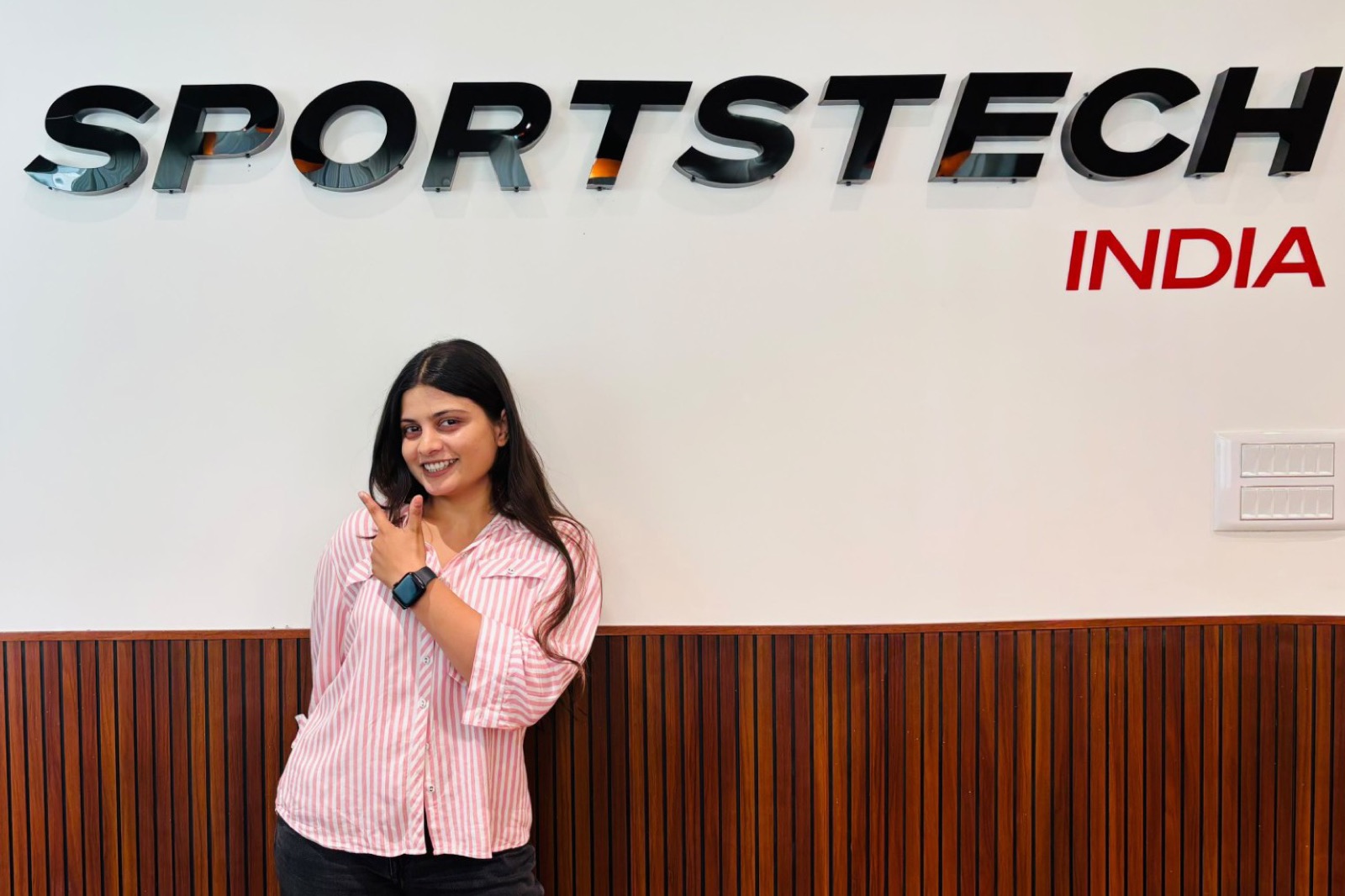
 Urmi MishraProduct Manager · Sportstech, Bangalore
Fig. 04 On site
That's how I've worked across fitness, hospitality and B2B industrial without a background in any of them. I learn a new domain fast, mostly by sitting with the people in it.
I adapt quickly to new teams and shifting priorities, and I like understanding where different people are coming from: an engineer weighing feasibility, a founder chasing growth, a receptionist with a queue at check-in.
Also — my PRDs spend real space on the problem and the business goal. I want engineers to fall in love with the problem, not just the ticket.